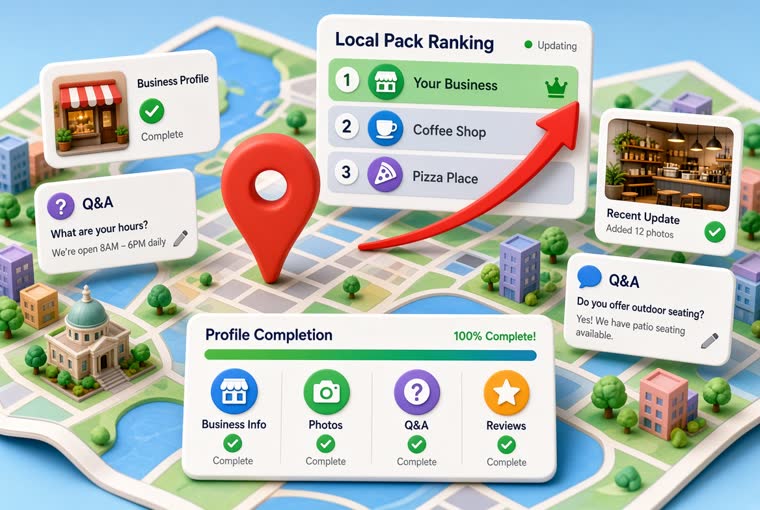
How to climb in Google Maps, step by step
Profile, photos, questions and feedback. Four jobs that cost far less than advertising.
ReadThree things. Photos carry more weight because people choose restaurants with their eyes. Dish names are the keywords — nobody searches for “Chinese restaurant”, they search for “lanzhou beef noodle”. And delivery platforms absorb feedback that would otherwise have landed on your Google page.
Fill in the menu section of your profile dish by dish rather than writing “Chinese food”. When somebody searches “flushing mala xiang guo”, Google has to find those words somewhere in your profile. The same applies to your website: put the menu on the page as real text, not as one large image. Google cannot read the words inside a picture.
The advantage is frequency — dozens or hundreds of people a day. Keep the card permanently on the counter and the tables, have staff add one line at checkout, and the flow becomes steady.
Anything written on a third-party app stays inside that app and never reaches Google. That is exactly why restaurants with heavy delivery volume often have surprisingly thin Google pages. There is one fix: put the code on the physical packaging and bring those customers back.
Changing hours for a holiday without updating Google is one of the most common causes of a one-star entry in this trade. Somebody drives over, finds the door locked, and rates you accordingly. Setting holiday hours in your profile takes a couple of minutes.
Restaurant replies do not need to sound like legal filings. “So glad you enjoyed the fish — tell the host next time and we will save you the window table” does far more work than a stock paragraph. For handling criticism, see You got a one-star note. Now what?
One thing to do today: move the QR table tent from the front door to the counter. In restaurants there is exactly one window — the thirty seconds after paying while they are still seated. Miss it and they are gone. Generate the code with the Google review QR code generator and print it. And if you have just opened and are still in single digits, start with from 0 to 50 Google reviews in 90 days — that pace from zero is far safer than one big push.
Profile, photos, questions and feedback. Four jobs that cost far less than advertising.
Read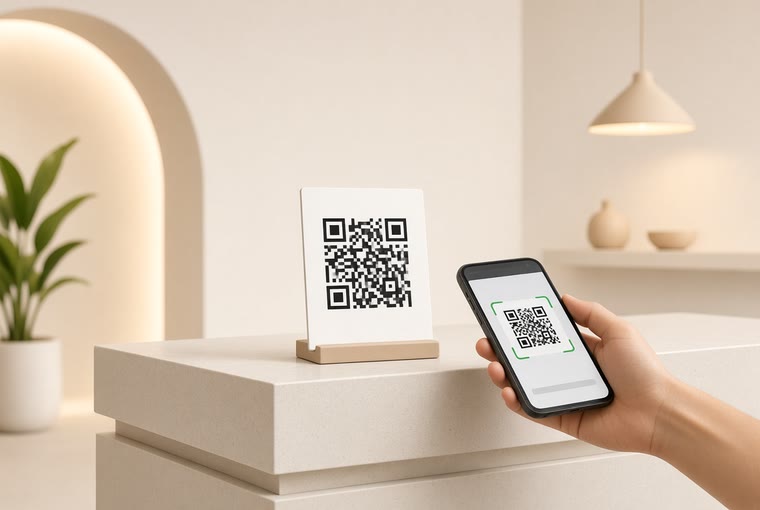
When nobody scans the code, it is almost always the placement. Seven spots and who each suits, three that waste your money, how big to print it and on what, and why the one sentence a staff member says matters more than the code.
Read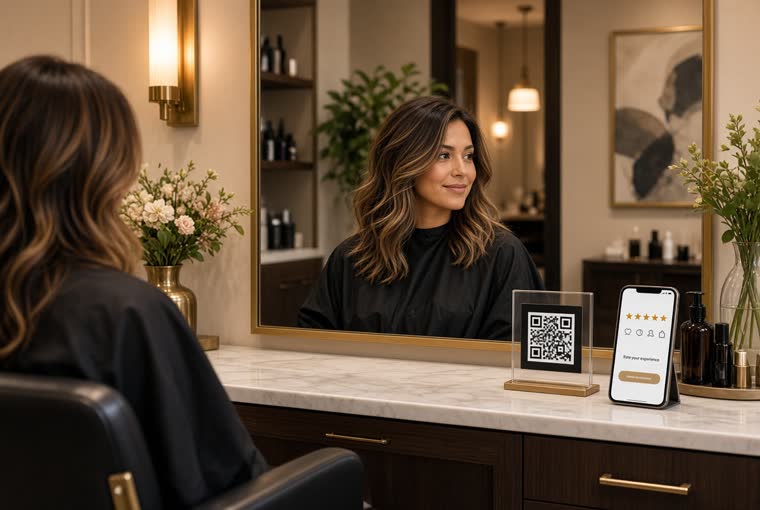
In this trade the moment is built into the service — the second they look in the mirror. Three lines to use as-is, where to put the code, and how to answer “it does not look like the photo”.
ReadCreate an account, add your location, and five minutes later the QR code is printed and sitting on the counter.