
From 0 to 50 Google reviews in 90 days
At zero, the hard part is not volume — it is getting the first person to say anything. Why the first ten are hardest, a 90-day pace table, and three mistakes that ruin a new listing.
ReadAsk any shop owner and the answer is the same: the customer says “that was lovely” at the counter and has forgotten by the time they reach the pavement. There are three real obstacles — not knowing where to write, not knowing what to write, and assuming it will take five minutes of typing. All three are fixable.
Not all moments are equal. Three of them work noticeably better than the rest:
The worst moments: as they walk in, while they are waiting for food, or while they are on the phone. Do not ask a busy person.
“Right after the service” means very different things in different businesses. Here is the moment for several common ones:
| Type of business | The moment to ask | Why then |
|---|---|---|
| Restaurant, cafe | After paying, before they stand up | The meal is still with them and they are still seated |
| Nails, hair | The second they look in the mirror | The result is right there — the emotional peak of the whole visit |
| Auto repair | At handover, after explaining what you fixed | The moment the worry lifts. Far better than when they pick up the keys |
| Clinic, dental | At the follow-up, once recovery is confirmed | After the first visit they do not yet know how it turned out. Do not rush it |
| On-site trades (plumbing, cleaning) | Before you pack up, with them looking at the work | Once you leave, the job is finished in their mind |
| Retail | Not at the till — text them a day or two later | At purchase they have not used it yet, so there is nothing to say |
There is one thing in common: ask at the moment the customer confirms it worked, not at the moment they pay. Those are often minutes apart, and the success rate is not remotely the same.
“If today went well, would you mind scanning this? It takes about thirty seconds and it really helps a small place like ours.”
“No typing needed — you just tap a couple of boxes, read it over, and send it if you are happy with it.”
“We are trying to build up our Google page at the moment. If you do not mind, this code is all it takes.”
“方便的话扫一下这个码,30 秒就好,对我们小店帮助很大。”
“And if something was not right, please put that in too. We genuinely read them.”
Pay attention to the last one. Volunteering that criticism is welcome makes people more likely to write, not less, and it makes the whole request feel honest.
The instinct is to hand the card only to people who look pleased. Google calls that review gating and prohibits it outright. Once detected, what you have collected can be wiped.
There is a practical reason too. A page carrying nothing but five-star entries and not a single middling one does not look believable. A handful of honest three and four-star notes makes the rest read as real.
No handbook needed, just three habits: tape the line next to the till, make sure every shift mentions it at least once, and read out the week number at the pre-shift huddle. The third one matters most — people keep doing what somebody notices.
Thirty days is enough to tell whether the asking is actually happening. Three numbers:
The honest last word: there is no trick here, only whether it gets done. A code on the counter and staff asking five times a day is thirty reviews a month. A code stuck in a corner that nobody mentions is zero. All a tool can do is take the thirty-second barrier away from the customer; the asking is still a person’s job.
If you have just opened and have no reviews at all, start with from 0 to 50 Google reviews in 90 days, which covers the pace from zero. To hand customers something they can scan and write from, use the Google review QR code generator. And if you were about to offer a discount or a small gift in return for a review, read Can you offer a discount for a Google review? first — that line is tighter than most people assume.
At zero, the hard part is not volume — it is getting the first person to say anything. Why the first ten are hardest, a 90-day pace table, and three mistakes that ruin a new listing.
Read
Filtering by satisfaction is called review gating. Google bans it and almost every business does it by accident. What it looks like, how Google finds it, and why it does not even pay.
Read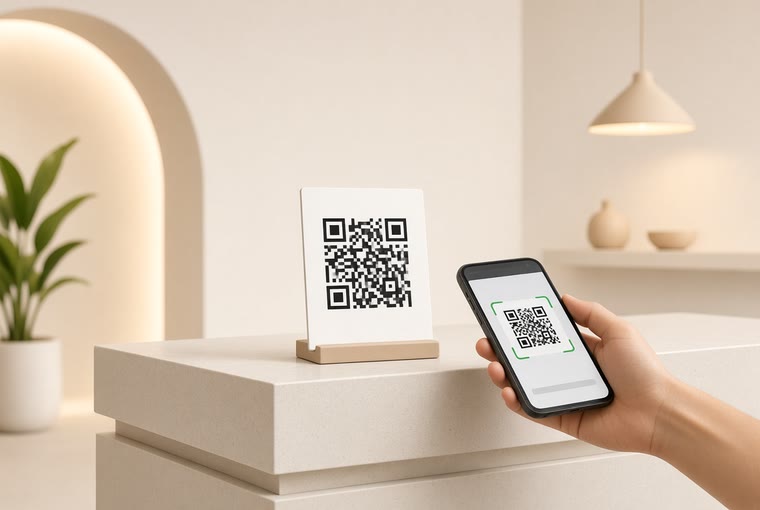
When nobody scans the code, it is almost always the placement. Seven spots and who each suits, three that waste your money, how big to print it and on what, and why the one sentence a staff member says matters more than the code.
ReadCreate an account, add your location, and five minutes later the QR code is printed and sitting on the counter.