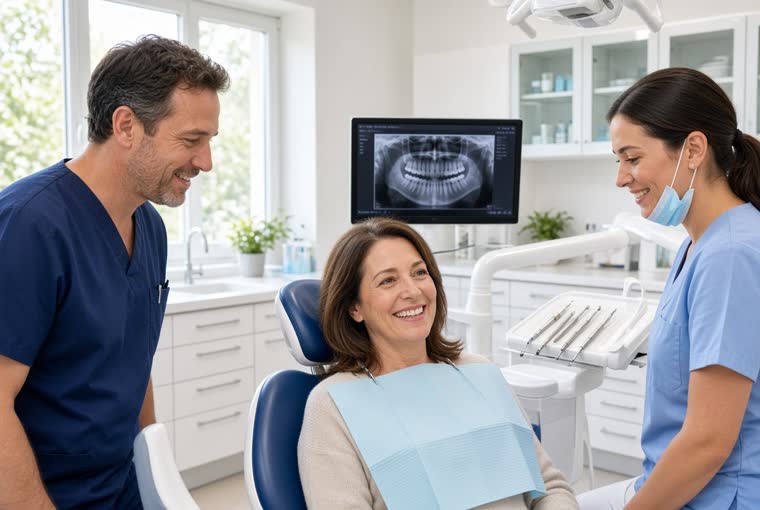
How dental practices get Google reviews
Numb, swollen and still tense — asking chairside is a wasted ask. In dentistry reviews come from the follow-up, the second you confirm it healed well. Plus how to answer the price complaint.
ReadClinics, dental practices, physiotherapy and traditional medicine all carry restrictions that a shop or restaurant does not. Crossing them can cost more than a deleted entry — it can touch professional conduct rules.
Anchor the request to the experience of visiting rather than to the medicine, and you stay on safe ground:
These are exactly what a new patient is weighing up anyway, and none of them touch clinical judgement.
“Was the visit straightforward today? If you have a moment, you can scan this and say a word about booking and waiting — it genuinely helps us improve.”
“There is no need to mention anything medical. Just the front desk and the practice itself is plenty.”
Saying “no need to mention anything medical” out loud is both a compliance safeguard and a way of lowering the patient hesitation.
At checkout on the way out, and from reception rather than from the practitioner. A request from the person who just treated them feels like pressure, and can be read as tied to the care itself.
In a public reply you must never confirm whether somebody is your patient, let alone mention any detail of their visit — that is a privacy breach. Keep it general:
“Thank you for the feedback. We have adjusted our appointment spacing in response to what people have told us about waiting. If you would like to discuss anything further, please call the practice and a member of the team will follow up.”
A clinic sees far fewer people per day than a restaurant, so consistency matters more. Two or three requests a day still adds up to dozens of chances a month. Keep the card permanently at the checkout desk so it becomes part of the process rather than something anyone has to remember.
One thing to do today: fix “at the follow-up, once recovery is confirmed” as your standing moment to ask, and write it into the front desk checklist rather than relying on anyone remembering. The difference between a clinic and a restaurant is frequency — miss three a day and that is ninety missed in a month. For the wording, see How to ask customers for Google Reviews; for the code on the desk, the Google review QR code generator is enough, one at reception.
Numb, swollen and still tense — asking chairside is a wasted ask. In dentistry reviews come from the follow-up, the second you confirm it healed well. Plus how to answer the price complaint.
Read
Clients are not unhappy — they do not want their name on it. Tell them a display name is fine, ask first where the matter is not sensitive, and three lines a lawyer must never cross in a reply.
Read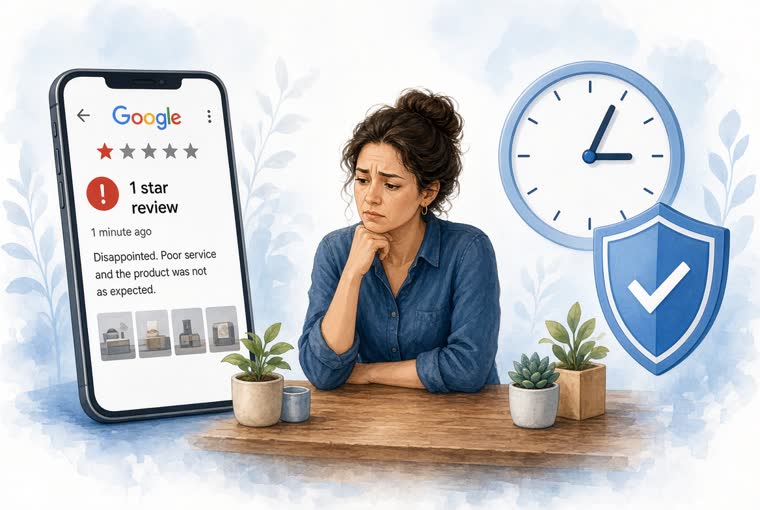
What to do in the first 24 hours, a reply template you can copy, and four things never to write.
ReadCreate an account, add your location, and five minutes later the QR code is printed and sitting on the counter.