
Home / Guides / 0 to 50 reviews

From 0 to 50 Google reviews in 90 days

At zero, the problem is not how to get lots of reviews. It is how to get the first person to say anything at all. Those need different tactics.

Why the first ten are hardest

On a page with no reviews, everyone who writes one is going first. With no social proof they hesitate: am I the only person leaving something here? Past a dozen or so, writing a review becomes joining in, and the difficulty falls off a cliff.

There is a second layer: Google is warier of brand-new listings. A sudden influx on a new profile is judged as review farming far more readily than the same influx on an established one. Which makes the worst possible move for a new business exactly the one most owners reach for — going all out in week one.

Week one: set up the channels

Do not start asking people everywhere on day one. Spend a week making sure that a customer who wants to write can find the place instantly. Every ask afterwards converts better for it.

  1. Make sure the Google listing is complete. Category, hours, phone, and at least ten photos. On a half-filled page, customers will not even hunt for the review button.
  2. Generate the review link and the QR code. Use the Google review link generator for the link and the Google review QR code generator for the image.
  3. Print three things: a counter stand, the bottom of the receipt, a sticker for the bag. Three placements for three kinds of customer — the one still in front of you, the one taking it away, and the one who remembers at home.
  4. Put the link in your email signature and text templates. Zero cost, works forever.
  5. Train one sentence. Staff only need: “If today worked out, would you mind saying so on Google? It takes about thirty seconds.” No script needed beyond that.

A 90-day pace table

The goal is not speed. It is steady and uninterrupted. The pace below is worked backwards from not tripping Google’s anomaly detection.

PeriodWeekly targetWhat to focus on
Weeks 1–21–2Only your most familiar regulars and the obviously delighted. The first batch needs to read well, not be numerous.
Weeks 3–62–3The counter QR starts pulling. Ask two or three people a day; one landing is enough.
Weeks 7–123–4Staff are used to asking now. Start texting customers you served the same day.
Week 13Total ≈ 35–45The rating has stabilised and the page starts appearing in local results.

It looks slow. It is also the only route that will not be undone by a single sweep three months from now. Businesses that rush to 50 in a month usually watch Your Google reviews disappeared — what happened around month six.

Who will write and who will not

  • Someone whose problem you just solved. The thing got fixed, the issue got sorted, you squeezed them in. Willingness peaks here — far above plain good service.
  • Someone you called by name. Staff remembered their usual order or their name. These people write at several times the rate of a stranger.
  • Someone who asked you a question and got a real answer. They have already had one genuine exchange with you.
  • Someone who came back with a friend. They are already recommending you. They just have not written it down.
  • Someone who bought and left in a hurry. Not unhappy — just no relationship. Do not spend the ask on them.
  • Someone who just complained and whom you calmed down. Publicly praising you is the last thing they want right now. Wait until they come back on their own.
  • Online orders you never met. Worth asking, but only by email or text, and the rate is much lower.

Three mistakes that ruin a new listing

  • Blasting your whole contact list on opening day. Thirty reviews in three days is the classic way a new listing dies. Most of them will not display, and the profile keeps the record.
  • Only handing out the link when you think they are happy. That is review gating. Google prohibits it explicitly and acts on the listing when it is found. For where the line actually sits, see Can you offer a discount for a Google review?
  • Having family and friends fill the place out first. One WiFi network, a handful of devices, accounts that all know each other — among the easiest patterns to spot. And when they go, they take the genuine ones beside them.

After you pass 50

Fifty is a threshold. The rating has settled and any single review moves it much less. The focus shifts from count to freshness — in local search, whether there are reviews from the last three months matters more than whether the total is 50 or 80. So the pace continues, but two or three a week is plenty.

Two other things start to matter at this point: How to respond to Google reviews: ten templates you can copy (the reply is seen by search and by the next customer), and How to climb in Google Maps, step by step. Reviews are part of ranking, not all of it. For the wording and the timing of the ask itself, see How to ask customers for Google Reviews.

Keep reading

Related guides

How to ask customers for Google Reviews
What to say

How to ask customers for Google Reviews

When to ask, the exact sentence to use, and what to hand over. Five lines you can memorise.

Read
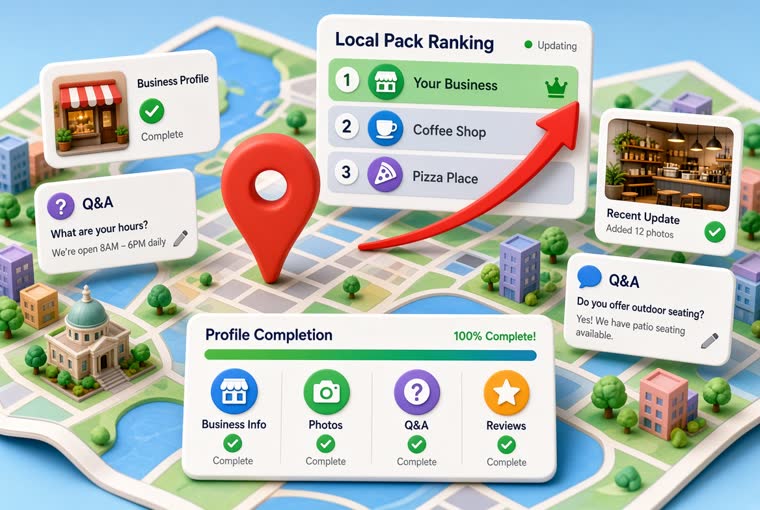
How to climb in Google Maps, step by step
Local SEO

How to climb in Google Maps, step by step

Profile, photos, questions and feedback. Four jobs that cost far less than advertising.

Read

How to manage Google reviews across multiple locations
Multiple locations

How to manage Google reviews across multiple locations

Every branch is a separate Google listing, not one brand page. What head office owns, how to diagnose a branch that scores much lower, and five traps specific to multi-site.

Read
Free right now

Reading it helps. Doing it helps more.

Create an account, add your location, and five minutes later the QR code is printed and sitting on the counter.